The Evidence for Directed Panspermia and the Case for Taking Exopolitics Seriously
Abstract
Contemporary science suffers from a reductionist bias that tries to confine every anthropological and biological anomaly within a strictly linear, endogenous model of evolution. This article examines how two of the most penetrating minds in modern science, Alfred Russel Wallace (co-discoverer of natural selection) and Francis Crick (Nobel laureate and co-discoverer of the structure of DNA), identified unresolved methodological gaps in our understanding of human evolution and the origin of life. By setting their postulates against the theoretical framework laid out in Beyond the Veil: Uncovering the truth about UFOs: An Extraordinary Journey Through Reason and the Cosmos (2nd ed., 2026), the article argues that there is an epistemological need to shift toward an exopolitical, directed-panspermia model. This approach offers a mathematical and empirical explanation for phenomena that mainstream science still labels inexplicable.
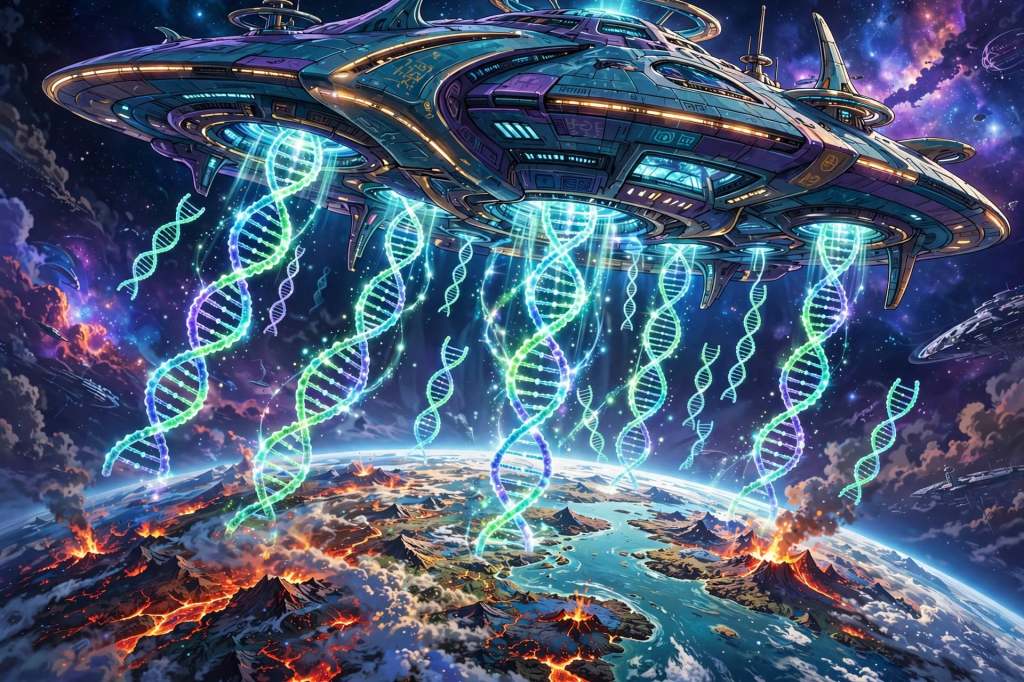
The Scientific Hypothesis of Directed Panspermia: When the Academic Paradigm Collides with Cosmic Logic
The official history of science is usually presented as a linear, peaceful progression of consensus truths. Yet the real quantum leaps in human knowledge have always come from disruptive minds willing to examine the anomalies that orthodoxy prefers to sweep under the rug of academic dogma. When we look at the origin of life and the evolution of humankind, we find that the very foundations of what is taught in our educational institutions were profoundly questioned by some of the most brilliant scientists in history.
The Evolutionary Anomaly of the Human Brain: Wallace’s Perspective
To understand this dilemma, we must go back to the nineteenth century and examine the figure of Alfred Russel Wallace. Far from being a passive observer, Wallace was a distinguished British naturalist, geographer, anthropologist, and biologist who co-discovered the theory of evolution by natural selection alongside Charles Darwin. The two presented their work jointly to the Linnean Society of London in 1858.
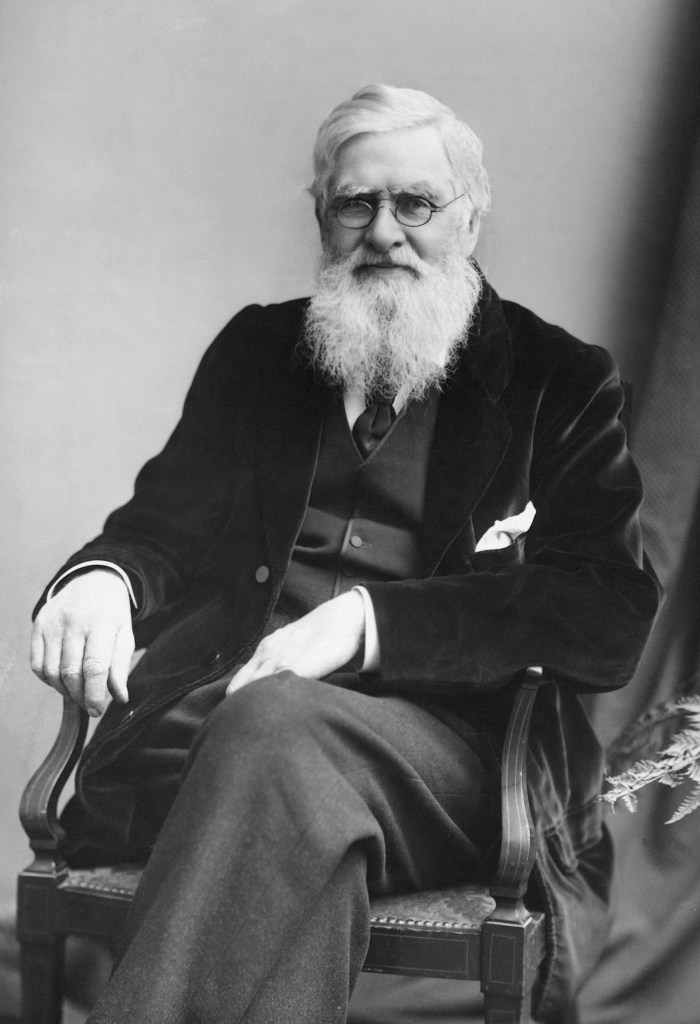
Unlike Darwin, however, Wallace began to notice a serious mathematical and functional inconsistency in our species. The central tenet of natural selection holds that a species develops organs or capacities strictly in proportion to its survival needs. If a trait offers no immediate advantage in feeding, reproduction, or evading predators, the evolutionary process does not spend energy developing it.
This is where Wallace parted ways with Darwin most sharply. In studying Indigenous communities living in geographically isolated settings with less technological development, he observed that these individuals possessed exactly the same brain capacity, structure, and cognitive ability as an upper-class European. They showed an innate potential for advanced mathematics, complex abstract thought, musical composition, and refined art.
To Wallace, this made no evolutionary sense: a human being living in a tropical rainforest, with ample resources to get by without much difficulty, had no need to master infinitesimal calculus or symphonic composition in order to survive. He concluded that Homo sapiens carried a preinstalled “payload” of development, a surplus capacity that far exceeded its immediate environmental pressures. Human evolution did not seem to be the product of a purely sequential, blind process, but rather the result of a qualitative leap guided by a superior intelligence or an outside force.
Molecular Biology and Systems Engineering: The Contribution of Crick and Orgel
Nearly a century later, the empirical dissonance of “the pieces don’t fit on Earth” led one of the most eminent scientists of the twentieth century to look for answers beyond the terrestrial biosphere: Francis Crick.
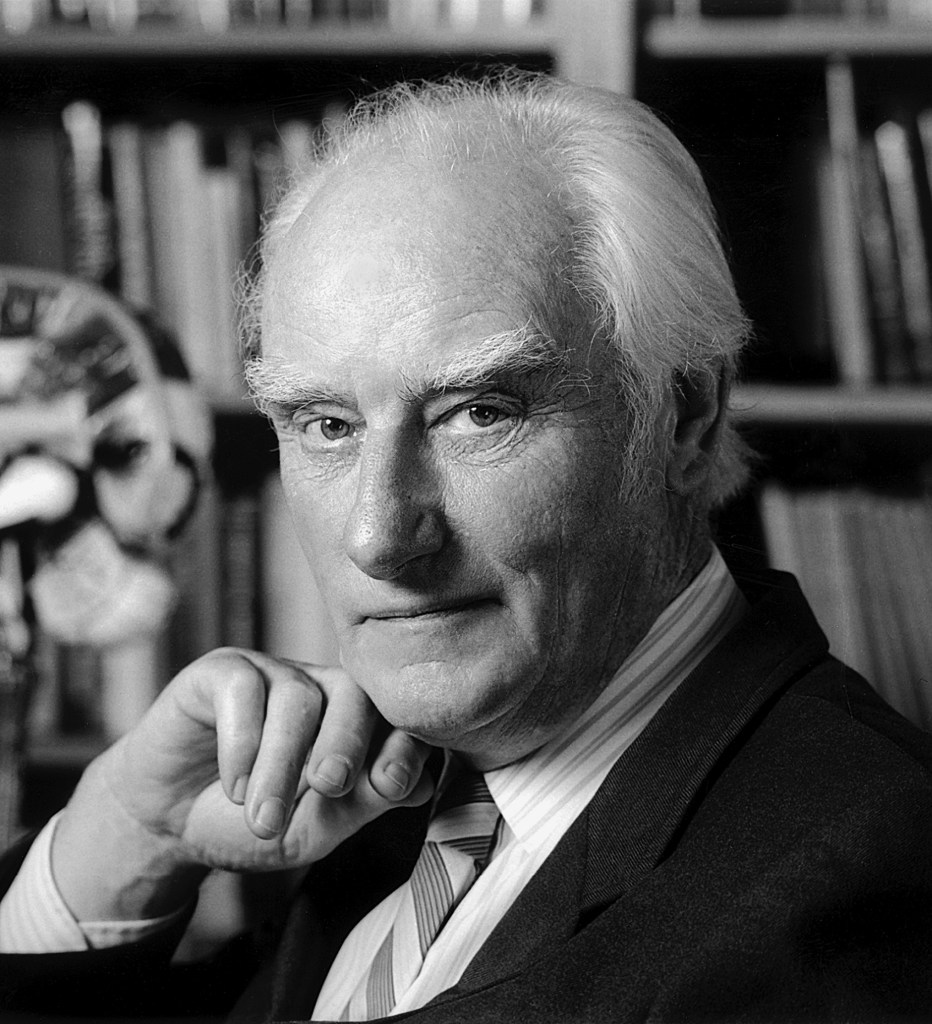
Crick, a British physicist and molecular biologist at the University of Cambridge, revolutionized the history of science by discovering the double-helix structure of DNA together with James Watson and Rosalind Franklin, a landmark that earned him the Nobel Prize in Physiology or Medicine in 1962. Far from being an armchair theorist, Crick understood the informational architecture of life thoroughly. To develop his hypothesis on the origin of living things, he teamed up with Leslie Orgel, a distinguished British chemist at the University of Oxford who specialized in the chemical evolution of organic systems.
Crick and Orgel approached the origin of life not through the traditional biological narrative but with the rigor of chemical and systems engineering. In doing so, they ran up against numerous epistemological and factual barriers.
Biological Constraints and Academic Bias
From an anatomical standpoint, human beings show subjective signs of being poorly adapted to this ecosystem. We are the only advanced species that suffers chronically from back pain, which suggests a biomechanical design better suited to a planetary body with weaker gravity. We also live on a planet that is 75% covered by salt water, a substance toxic to our cells, and we lack the fur or thermal resilience of other mammals, depending entirely on artificial technology (clothing, fire, shelter) to survive climatic variation.
But beyond these subjective observations, Crick grounded his position in molecular and statistical evidence:
- The Single Strain (LUCA): If life were an inevitable geochemical outcome of the early Earth, it should have arisen many times over, producing biospheres based on different genetic codes. Yet every living organism on the planet shares exactly the same genetic matrix. Life, therefore, appears to have originated in a single, singular event.
- The Thermodynamic Time Window: The early Earth suffered constant asteroid bombardment that sterilized its surface. From planetary cooling to the appearance of the first complex bacteria, a mere 200 to 400 million years elapsed. For Crick, that window is mathematically insufficient for the entropy of a “primordial soup” to simultaneously assemble the mutually dependent software and hardware (DNA and proteins), which is the classic chicken-and-egg paradox.
- The Molybdenum Paradox: In chemical engineering, reactors require catalysts. Terrestrial biochemistry depends critically on molybdenum (Mo) for vital reactions such as nitrogen fixation. The inconsistency is that molybdenum is extremely scarce in the Earth’s crust (only 0.00012% in our world). It makes little sense for life to have optimized its metabolic machinery around a metal that was practically nonexistent in its initial environment.
Drawing these empirical variables together, Crick and Orgel postulated that life did not originate on Earth but arrived fully developed, packaged, and inoculated. The thesis was formalized, peer-reviewed, and published in 1973 in Icarus, the prestigious journal of astronomy and planetary science.
The Galactic Habitable Zone and the Cosmic Evolutionary Head Start
On the cosmological level, contemporary data overwhelmingly support Crick’s thesis of a temporal head start. A landmark astrobiological study published in 2021 by researchers at Columbia University redefined the Galactic Habitable Zone. Its analysis determined mathematically that the optimal region for the development of intelligent life and stable planets is not the outer edge (where Earth sits, roughly 26,000 light-years from the galactic center and its supermassive black hole, Sagittarius A*), but an inner ring located precisely 13,000 light-years from it.
In cosmic engineering terms, this implies that the star systems in that region formed and stabilized between 3 and 5 billion years before Earth did. Consequently, when our planet was still a sterile sphere of molten rock, the “13,000 Club” could already have hosted civilizations capable of completing entire biological and computational cycles.
Within this framework, directed panspermia emerges not as accidental seeding but as a contingency and survival plan. The massive stars of that galactic region have a lifespan of roughly 10 billion years before collapsing into lethal supernovae. Facing the imminent destruction of their worlds after billions of years of development, these intelligences would have designed a network of automated biological inoculation craft to seed life on younger, more stable worlds on the periphery, guaranteeing the continuity of their molecular matrix. Under this model, Earth serves as a “Plan B.”
The Big Picture: From Sumerian Records to UAP Case Studies
When all the variables in the system are assembled, Earth’s history takes on a new empirical meaning, and the religious records of antiquity are transmuted from mere mythology into encoded historical memory. Sumerian cuneiform tablets describe the Anunnaki with precision: entities “come from the sky” who allegedly manipulated local biology to create human beings as a labor force (an advanced biological operator), meant to modify and prepare Earth as a reserve ecosystem. This perspective suggests that the human “coupling” was not conceived as a passive symbiosis but as a terraforming agent.
This approach offers a seamless answer to the greatest question in scientific ufology. If various nonhuman intelligences are visiting us, as the incontrovertible radar, telemetry, and plasma-physics data from the 2004 USS Nimitz case demonstrate, along with the Foo Fighter records of World War II and ancient historical documents such as the report from 76 BC by the Roman Pliny the Elder in his Naturalis Historia (who recorded a “spark” that fell from a star, grew to the size of the Moon, and then rose back up), why do they not make formal contact, or why do they keep monitoring us?
The analogy is illuminating: a farmer does not ask permission from, or introduce himself to, the ants on a plot of land he is preparing. He simply inspects the viability of his crop from time to time, audits whether the biological labor force is keeping the operating system running, and verifies that “Plan B” is maturing according to its programmed parameters. The flight anomalies of Unidentified Anomalous Phenomena (UAP), with accelerations exceeding thousands of g-forces, would represent the technological signature of the original designers of the human biological software.
Epistemological Limitations: A Critique of Popper’s Falsificationism
Despite the intellectual stature of its authors, the traditional academic community dismissed the Crick–Orgel hypothesis as “pseudoscience,” hiding behind the strict falsificationism of Karl Popper.
The Popperian paradigm holds that if a phenomenon cannot be controlled, replicated in a laboratory, or falsified with our current technical capabilities, it lies outside the field of science. This stance is one of the greatest deficiencies of contemporary thought: the methodological and technological shortcomings of our era are papered over by the decree that whatever escapes our measuring tools simply does not exist. Under absolute Popperian rigor, mathematically consistent theories such as String Theory or M-Theory would meet the same fate, even though they offer valid frameworks for explaining the physical anomalies recorded by military instrumentation.
Genuine scientific progress has never been content with the mechanical repetition of the dogma of the day. True science is disruptive:
- Democritus deduced the atom through thought experiments in an era dominated by magical thinking.
- Newton redefined the cosmos by overthrowing Aristotelian physics.
- Einstein blew up the notions of absolute time and space at a moment when academia considered physics virtually complete.
Appealing to “academic consensus” to discredit directed panspermia is an argument from authority. Consider that there are roughly 5,700 institutions of higher education in the United States, yet the vast majority of Nobel Prizes in the physical sciences come from just 15 elite institutions (such as Harvard, MIT, Stanford, Princeton, and Caltech). A college degree does not guarantee original thinking; many institutions harbor professionals conditioned by academic bureaucracy to protect their budgets through an aversion to intellectual risk.
Challenging anthropocentrism, the assumption that we are the biological epicenter of the universe, is a rational imperative in the face of the probabilistic data put forward by intellectuals of Crick’s stature.
Scientific Convergence on Directed Panspermia
Francis Crick and Leslie Orgel are not isolated voices on this subject. The idea of deliberate seeding, or of humanity’s ethical responsibility to propagate life, has been consistently endorsed by first-rate scientists over the decades:
| Scientist | Field of Specialty | Contribution to Directed Panspermia |
| J. B. S. Haldane (University of Oxford) | Genetics and Evolutionary Biology | First modern scientist to propose, in 1954, intentional seeding by extraterrestrial intelligences and an exogenous origin for terrestrial homochirality. |
| Leslie Orgel (University of Oxford) | Chemistry and Prebiotic Evolution | Co-author, with Francis Crick, of the foundational 1973 paper in Icarus. |
| Fred Hoyle & Chandra Wickramasinghe (Cambridge) | Astrophysics and Cosmology | Formulated mathematical models of the informational transport of genes, suggesting that physical laws and genetic structures point to intelligent intervention. |
| Michael N. Mautner (Rockefeller University) | Chemistry and Astrobiology | Designed, in the 1970s and 1980s, the first realistic physical models of automated craft and capsules for cosmic seeding (the concept of “panbiotics”). |
| Avi Loeb (Harvard University) | Astronomy and Astrophysics | Advocates the mathematical analysis of intelligent interstellar probes as vectors for organic transport, investigating anomalous objects such as ‘Oumuamua. |
Exopolitics as Unified Synthesis
At a time when traditional anthropology and molecular biology are running aground on their own contradictions, the second edition of Beyond the Veil: Uncovering the truth about UFOs: An Extraordinary Journey Through Reason and the Cosmos (2nd Ed.) supplies the keystone through its central hypothesis: the story of Giga and the 13,000 Club.
What Wallace deduced as a guiding force, and what Crick demonstrated as automated molecular seeding, finds a rigorous empirical correlate in Andean and international exopolitics. The analysis of primary viceregal sources, such as Juan de Betanzos’s 1551 compilation, documents the cyclical arrival of exogenous physical instructors (Con Tici Viracocha, Bochica, Quetzalcoatl). These figures are described not as abstract deities but as supervisors with specific physical features and sophisticated instruments, who allegedly intervened during periods of collapse to redirect the cultivation of humankind.
This theoretical framework is further supported by cutting-edge physics. The work integrates simulation models showing how the Alcubierre metric for intragalactic travel, the Revoredo mechanism for intergalactic travel, and the control of zero-point energy account for the “five observables” of craft detected by contemporary military sensors. This shows that the speed of light is not an absolute limit of the universe but merely a methodological frontier of present-day science and engineering.
Conclusion: Toward Overcoming the Popper Limit
The academy’s resistance to validating the directed panspermia thesis stems not from a lack of evidence but from the severe intrinsic limitations of the prevailing epistemological method. Falsificationism is useful for the chemistry and physics of closed, low-velocity systems, but it proves obsolete and ineffective for analyzing interactions with Type II or III civilizations on the Kardashev Scale (UAP phenomena). Just as Newtonian physics was subsumed by relativity and quantum mechanics, the current paradigm demands a deep restructuring that incorporates advanced scientific speculation and documentary exopolitics, free of anthropocentric bias. This indispensable methodological transition will mark the surpassing of the boundaries of traditional epistemology.
Bibliography and Academic Reference Sources
- Alcubierre, M. (1994). The warp drive: Hyper-fast travel within general relativity. Classical and Quantum Gravity, 11(5), L73–L77. (Provides the mathematical and physical framework that theoretically supports the feasibility of the faster-than-light travel cited as underpinning UAP technology.)
- Betanzos, J. de. (1987). Suma y narración de los Incas (M. del C. Martín Rubio, Ed.). Universidad del Pacífico. (Originally published in 1551; used to ground Andean exopolitics by historically describing exogenous physical instructors.)
- Cai, X., Jiang, J. H., Fahy, K. A., & Yung, Y. L. (2021). A statistical estimation of the occurrence of extraterrestrial intelligence in the Milky Way Galaxy. Galaxies, 9(1), Article 5. https://doi.org/10.3390/galaxies9010005 (Astrobiological simulation model that places the peak likelihood of intelligent life in an annular region approximately 4 kiloparsecs, or roughly 13,000 light-years, from the galactic center, indicating a high likelihood of intelligent life in the galactic inner disk.)
- Cieza de León, P. (2005). Crónica del Perú: El señorío de los Incas (F. Pease G. Y., Ed.). Ayacucho. (Originally published in 1553; a primary viceregal source serving as reference for exopolitical analyses of ancient contact.)
- Crick, F. H. C. (1958). On protein synthesis. Symposia of the Society for Experimental Biology, 12, 138–163. (A precursor to Crick’s molecular work on the structural complexity of proteins, which would later inform his view of the origin of life.)
- Crick, F. H. C., & Orgel, L. E. (1973). Directed panspermia. Icarus, 19(3), 341–346. (The foundational peer-reviewed article that formally introduced the hypothesis of extraterrestrial biological seeding and questioned the mathematical probabilities of a terrestrial origin of life.)
- Crick, F. H. C. (1976, November 5). Directed panspermia. [Keynote lecture]. Scripps Institution of Oceanography, La Jolla, CA, United States. (Public presentation and academic defense of the premises of directed panspermia.)
- Crick, F. (1981). Life itself: Its origin and nature. Simon & Schuster. (An extensive popular work in which Crick lays out the molecular constraints of Earth, the thermodynamic time window, and the molybdenum paradox.)
- Fernández de Quirós, P. (1876). Historia del descubrimiento de las regiones austriales hecho por el general Pedro Fernández de Quirós (J. Zaragoza, Ed.). Imprenta de Manuel G. Hernández. (Original manuscripts from 1595–1606, used as exploratory documentary context.)
- Ginsburg, I., & Lingam, M. (2021). The history and origins of directed panspermia. Draft version June 22, 2021, AASTeX62. Department of Physics and Astronomy, Georgia State University / Florida Institute of Technology. (Provides broad context on the academic, biological, and astronomical development of directed panspermia.)
- Haldane, J. B. S. (1954). The origins of life. New Biology, 16, 12–27. (The first modern scientist to formally suggest that life on Earth may have begun through the intentional inoculation of “cosmic seeds.”)
- Hoyle, F., & Wickramasinghe, C. (1981). Evolution from space. J. M. Dent & Sons. (Develops the astrophysical models on how the universe’s genetic material and physical laws show patterns of intelligent intervention.)
- Loeb, A. (2021). Extraterrestrial: The first sign of intelligent life beyond Earth. Houghton Mifflin Harcourt. (Sets out the feasibility of intelligent interstellar probes sent by advanced civilizations, referencing the anomalous object ‘Oumuamua and the work of Project Galileo.)
- Mautner, M. N., & Matloff, G. L. (1979). Directed panspermia: A technical and ethical evaluation of seeding nearby solar systems. Journal of the British Interplanetary Society, 32, 419–423. (A publication demonstrating the technical feasibility of galactic seeding via solar sails and postulating the ethical obligation of “panbiotics.”)
- Neveu, M., et al. (2020). Panspermia theory dives under other worlds’ ocean ice crust. Aeon Essays. (Addresses recent theoretical approaches to panspermia and biological viability in exoplanets and beneath ocean ice.)
- Pliny the Elder. (AD 77). Naturalis Historia. (A classical historical document cited as an early record of anomalous phenomena consistent with modern observational metrics of UAP.)
- Popper, K. R. (2002). La lógica de la investigación científica. Tecnos. (Originally published in 1934; used in the text to structure the critique of how pure falsificationism imposes artificial limits on the analysis of anomalous phenomena or superior intelligences.)
- Revoredo, J. F. (2026). OVNI/UFO: La historia jamás contada – Un extraordinario viaje a través de la razón y el cosmos (2nd ed.). Edición del Autor. Safe Creative ID: 2609096946315-4PFDJV. (Primary source of the article; provides the general exopolitical framework, the hypothetical mechanisms of intergalactic travel, and the thesis on “Giga and the 13,000 Club.”)
- Silver, E. (2013). Humans are not from Earth: A scientific evaluation of the evidence. (A supporting work that analytically details the biological and physiognomic maladaptations of human beings to the terrestrial environment.)
- Smith, K. C., & Mariscal, C. (2022). The cosmic significance of directed panspermia: Should humanity spread life to other solar systems? Cambridge University Press. (Argues the contemporary ethical framework and underlying cosmological implications of expanding biology beyond our origin.)
- Wallace, A. R. (1858). On the tendency of varieties to depart indefinitely from the original type. Journal of the Proceedings of the Linnean Society: Zoology, 3(9), 53–62. (Foundational work on the theory of evolution and natural selection.)
- Wallace, A. R. (1864). The origin of human races and the antiquity of man deduced from the theory of “natural selection.” Journal of the Anthropological Society of London, 2, clviii–clxxxvii. (Shows the first signs of Wallace’s intellectual break regarding human brain adaptation.)
- Wallace, A. R. (1869). Sir Charles Lyell on geological climates and the origin of species. The Quarterly Review, 126, 359–394. (Fundamental publication in which he formally sets out his doubts about the limits of natural selection as applied to intellect and human development.)
- Wallace, A. R. (1870). Contributions to the theory of natural selection: A series of essays. Macmillan and Co. (A compendium reiterating the insufficiency of the basic biological environment to account for the high latent intellectual faculties of human beings.)


Leave a comment