Many of us have at some point spotted unexplained flashes in the night sky, or maybe heard a relative or friend swear they’d witnessed something truly strange. Yet even when these experiences were completely real to the people who lived them, modern science and its current paradigm don’t treat matching testimony from witnesses who never had contact with one another as sufficient proof. The academic consensus demands calibrated empirical data, repeatable measurements, and verifiable instrument records to rule out perceptual bias, optical illusions, or fabrication.
The U.S.S. Nimitz Carrier Strike Group Incident, which took place in November 2004 off the coast of Southern California and the Baja California peninsula, definitively broke down the boundary between simple eyewitness accounts and hard scientific evidence. This is not just another UFO report or a piece of science fiction; it is an ironclad case built on military investigation and advanced physics.

1. Operational Context and Detailed Timeline (November 2004)
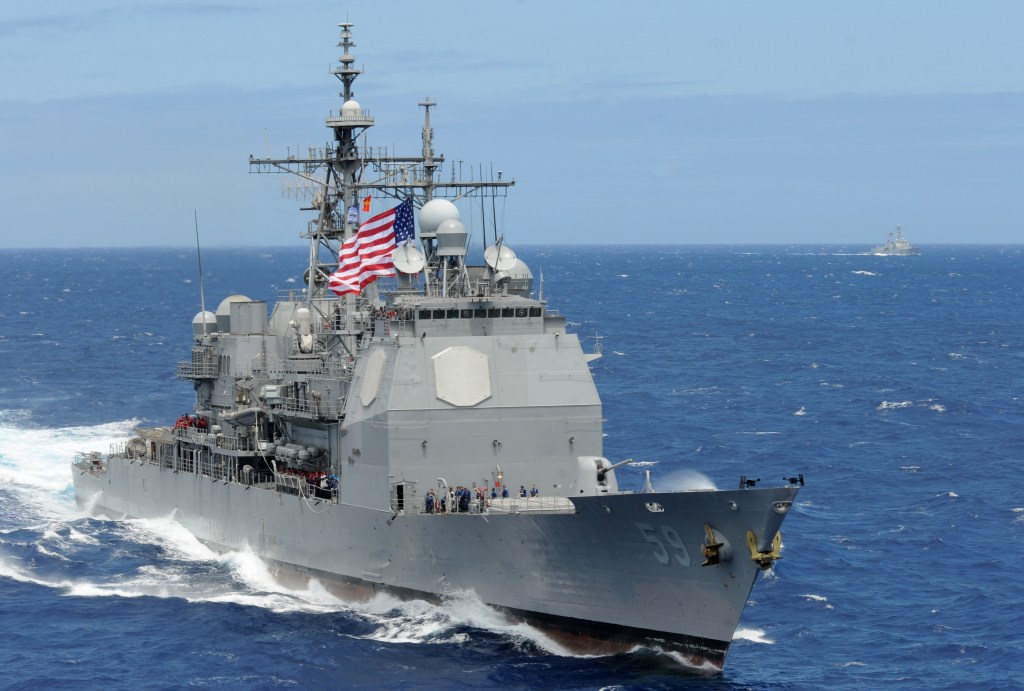
During the first half of November 2004, Carrier Strike Group 11 (CSG-11) of the United States Navy — led by the nuclear-powered aircraft carrier U.S.S. Nimitz (CVN-68) and the Ticonderoga-class guided-missile cruiser U.S.S. Princeton (CG-59) — was conducting pre-deployment combat training exercises in the San Clemente Operating Area, roughly 80-100 nautical miles southwest of San Diego.
| CSG-11 Battle Group Structure |
| U.S.S. Nimitz (CVN-68): Nuclear-powered aircraft carrier. Home to Strike Fighter Squadron VFA-41 “Black Aces,” F/A-18F Super Hornet fighters, and ATFLIR targeting pods (AN/ASQ-228). |
| U.S.S. Princeton (CG-59): Guided-missile cruiser. Equipped with Aegis AN/SPY-1B radar and a Combat Information Center (CIC) under the supervision of Senior Chief Kevin Day. |
| E-2C Hawkeye: Airborne early-warning aircraft with AN/APS-145 UHF radar. |
| Attack Submarines: Sub-surface coverage and acoustic monitoring of the area. |

Starting on November 10, 2004, operators in the Combat Information Center (CIC) aboard the U.S.S. Princeton detected intermittent, anomalous radar tracks. Senior Chief Operations Specialist Kevin Day, a seasoned Aegis radar intercept controller, identified clusters of 10 to 20 Unidentified Flying Objects (internally designated Anomalous Aerial Vehicles, or AAVs).
The objects entered the radar screen at altitudes above 80,000 feet (24,384 meters — the upper limit of the defense system’s tracking mode), then suddenly dropped to hover at 28,000 feet (8,534 meters) while holding a southbound flight path at a cruising speed of about 100 knots (~185 km/h). Repeatedly, some of these contacts would dive from 28,000 feet down to sea level (under 50 feet / 15 meters) or below the resolution threshold of the ocean surface in less than a second.
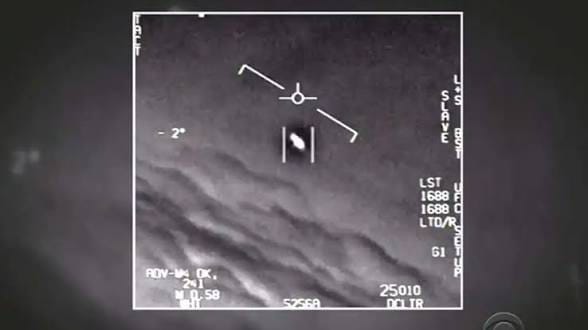
Given how persistent the phenomenon was, and to rule out radar malfunctions across the fleet, Senior Chief Kevin Day requested a diagnostic test of the Aegis system and a full reset of the radar consoles. Once the technical recalibration was complete, the anomalous contacts reappeared in the exact same positions with the exact same flight characteristics, confirming the phenomenon’s physical reality.
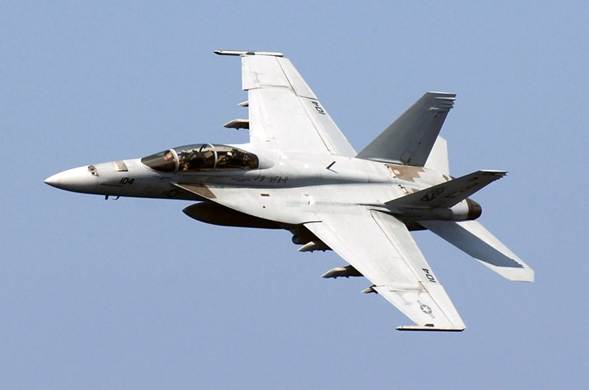
On November 14, 2004, during a routine air-combat training mission (Air Defense Exercise), the U.S.S. Princeton diverted two F/A-18F Super Hornet fighters from Strike Fighter Squadron 41 (“Black Aces”) to intercept an active contact 30 nautical miles out.
The Visual Intercept (Eyewitnesses):
- Commander David Fravor (Commanding Officer of VFA-41, a Topgun graduate) alongside his Weapon Systems Officer (WSO), Jim Slaight.

2. Lieutenant Alex Dietrich alongside her WSO in the second, covering fighter jet.
As they approached the vectored rendezvous point, all four aviators observed, from about 20,000 feet, a distinctive disturbance in the ocean surface: the water was churning and “boiling” white and frothy over a submerged, oval-shaped mass roughly the size of a Boeing 737 commercial airliner.
Directly above the disturbance, hovering about 50 feet over the water, an object maneuvered — matte white, smooth, seamless, with no wings, no fins, no visible engines, no exhaust pipes, and no windows, roughly 40 feet (12 meters) long, its shape reminiscent of a “Tic Tac” mint. Two small L-shaped protrusions, or “antennas,” jutted from the bottom of the fuselage.
Commander Fravor began a spiraling descent to make a visual identification pass. The “Tic Tac” object reacted: it turned toward Fravor and began climbing, mirroring the F/A-18F’s movements in a symmetrical, mirror-image pattern. When Fravor tried to cut across its flight path with an aggressive maneuver to get behind the object, the Tic Tac instantly accelerated in a non-inertial manner, vanishing from visual range in under half a second.
Less than a minute later, radar operator Kevin Day aboard the U.S.S. Princeton confirmed over the radio that the object had reappeared exactly at the CAP Point (Combat Air Patrol), the highly classified military coordinate previously assigned to the air patrol, located 60 nautical miles (111 km) away. The object had covered that distance in a matter of seconds.
Shortly after, a second pair of F/A-18F fighters, led by Lieutenant Chad Underwood, launched from the U.S.S. Nimitz equipped with the AN/ASQ-228 ATFLIR electro-optical/infrared targeting pod. Underwood managed to lock onto the AAV’s signature using the infrared camera and record the official thermal footage known as the “FLIR1” recording (or Tic Tac video), in which the object ultimately breaks the automatic lock (auto-lock) by accelerating laterally out of frame at extreme speed.
2. Multi-Sensor Redundancy Across Spectral Bands
For an aeronautical event to reach the level of an indisputable scientific fact, it has to clear the bar of oral testimony through cross-instrument verification (data triangulation). The Nimitz incident involved an entire network of military sensors operating across different frequency bands:
| Instrument / Platform | Sensor Type | Band / Wavelength |
| AN/SPY-1B (U.S.S. Princeton) | 3D Passive Phased-Array Radar (Aegis) | S-Band (2-4 GHz). High-Power Multi-Phase Transmission. |
| AN/APG-73 (F/A-18F Fighters) | Airborne Pulse-Doppler Radar | X-Band (8-12 GHz). Fire Control and Lock-On. |
| AN/APS-145 (E-2C Hawkeye) | Early Airborne Search Radar | UHF Band (400-450 MHz). Long-Range Detection. |
| AN/ASQ-228 ATFLIR (Targeting Pod) | Mid-Wave Infrared / Visible-Light Camera | MWIR (3.0-5.0 µm) and Visible Spectrum (0.4-0.7 µm). |
| Human Eye (Fravor, Dietrich, et al.) | Direct Foveal Vision | Visible Optical Band. Cross-Visual Observation by 4 Pilots. |
What the Sensor-Spectrum Redundancy Means:
- Immunity to Software Errors: A software glitch or “artifact” can produce a ghost echo on an S-Band radar, but it cannot simultaneously manifest as a temperature-contrasted target on the optical infrared (MWIR) sensor of an aircraft in flight, nor be seen with the naked eye by four military pilots from different angles.
- Immunity to Electronic Warfare (EW) Interference: Radar-suppression or spoofing techniques such as chaff or DRFM jamming don’t produce solid optical signatures recorded on close-range infrared cameras, nor do they physically disturb the ocean’s surface.
3. Declassification, Leak, and Institutional History
For years, this material and the radar recordings sat locked away in government files, out of public reach. That changed in 2017, when the information came to light through a leak orchestrated by Luis Elizondo, a former military intelligence officer who ran the Advanced Aerospace Threat Identification Program (AATIP) under the Defense Intelligence Agency (DIA).
Elizondo resigned from his post at the Pentagon in October 2017, demanding greater transparency and criticizing the excessive zeal with which this data was being withheld. Working with the organization To the Stars Academy (TTSA) and journalists Leslie Kean and Ralph Blumenthal, he arranged for the declassified footage to be handed over to The New York Times, which on December 16, 2017, revealed to the public the existence of the AATIP program and the Nimitz videos.
On April 27, 2020, the Pentagon issued an official statement formally declassifying three Navy videos (including the Nimitz “FLIR1” footage), explicitly acknowledging that the videos were authentic recordings made by military aviators and formally classifying the captured objects as “unidentified.”
The 2004 phenomenon could not be discredited or explained away by the All-domain Anomaly Resolution Office (AARO) or by any other government body, given how conclusive the military telemetry records were. The impossibility of covering up the event pushed the discussion straight to the committees of the U.S. Congress.
On July 26, 2023, in a historic hearing before the House Oversight and Accountability Subcommittee, key witnesses testified under oath:
- Commander David Fravor: Testified in detail about the Tic Tac’s maneuverability, stating that the technology observed was decades ahead of any known terrestrial military invention or development.
- Ryan Graves: Former Navy F/A-18 pilot and founder of Americans for Safe Aerospace, who detailed the operational risks to aviation.
- David Grusch: Former NGA and NRO intelligence officer, who testified under oath that the government maintains undisclosed secret programs for the crash retrieval of physical remains of non-human technology.

4. Independent Scientific Analysis: The Formal SCU and University at Albany Study
In 2019, a multidisciplinary team of scientists, engineers, and mathematicians from the Scientific Coalition for UAP Studies (SCU) published a detailed, peer-reviewed forensic study in the academic journal Proceedings (MDPI), later backed by further analysis.
Lead Investigators:
- Dr. Kevin H. Knuth: Physicist, Associate Professor in the Department of Physics at the University at Albany (SUNY), and former researcher at NASA’s Ames Research Center.
- Robert M. Powell: Physicist and Principal Investigator at the SCU.
- Dr. Peter A. Reali: Electrical engineer and researcher.
Title of the Scientific Publication:
“Estimating Flight Characteristics of Anomalous Unidentified Aerial Vehicles in the 2004 Nimitz Encounter”
(MDPI Proceedings 2019, 33(1), 26; doi:10.3390/proceedings2019033026).
| Calculated Parameter | Numerical Value Derived from Telemetry |
| Altitude Drop (∆y) | From 28,000 feet (8,530 m) to 50 feet (15 m) |
| Elapsed Time (∆t) | 0.78 ± 0.08 seconds |
| Minimum Calculated Acceleration (a) | 5,370 g to 5,950 g |
| Claimed Maximum Speed (vmax) | Mach 60 (~46,000 mph / ~74,000 km/h) |
| Peak Power Required (Mass of 1,000 kg) | 1,100 Gigawatts (GW) |
Breakdown of the Extreme Physical Calculations:
- G-Forces and Structural Tolerance:
The calculated acceleration of roughly 5,370 g exceeds, by orders of magnitude, both human biomechanical limits and the structural tolerances of contemporary aeronautical engineering.
- A trained human body blacks out (G-LOC) above roughly 9 sustained g’s.
- The airframe of a modern fighter jet like the F/A-18 Super Hornet suffers structural failure above 13.5 g’s.
- Calculating the Implied Power Output:
Even conservatively assuming the “Tic Tac” object had a mass of just 1,000 kg, the kinetic energy needed to accelerate that mass to Mach 60 in 0.78 seconds works out to a peak continuous power output of 1,100 Gigawatts (GW). That’s more than 10 times the total nuclear power output of the entire United States — equivalent to the combined output of over 330 commercial nuclear power plants operating simultaneously.
- Absence of Thermal Signatures and Aerodynamic Phenomena:
A conventional object moving at hypersonic speeds of Mach 60 through dense atmosphere would generate a massive sonic boom and a layer of plasma ionized by atmospheric friction. In the ATFLIR pod footage and the telemetry data, the object produced no sonic boom, left no vapor trail or turbulence, and showed no thermal exhaust signatures.
The scientific conclusions are unequivocal: unless this was a coordinated fraud by the U.S. Navy, or an identical, simultaneous failure of phased-array radar, infrared sensors, and the eyes of experienced pilots, the kinematic behavior observed is flatly impossible for any known terrestrial technology.
5. The Theoretical Propulsion Model: The Alcubierre Metric and the DIA Documents
Far from dismissing this behavior as “impossible,” the U.S. Department of Defense itself, through the AAWSA program under the Defense Intelligence Agency (DIA), devoted resources to analyzing the theoretical physics that could explain this kind of propulsion.
In the DIA’s official reference document titled “Advanced Space Propulsion Based on Vacuum (Spacetime Metric) Engineering” (DIA-08-1003-015), written by theoretical physicist Dr. Eric W. Davis, defense scientists explain that this kind of aircraft performance is explained through the Alcubierre Metric, or “Spacetime Metric Engineering” (Warp Drive):
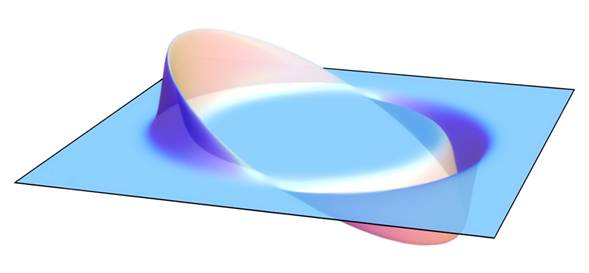
The mathematical model formulated by theoretical physicist Dr. Miguel Alcubierre Moya (1994) demonstrates that Einstein’s General Relativity field equations allow the geometry of spacetime around a vehicle to be modified:
- Manipulating the Vacuum: The craft isn’t propelled chemically, nor does it mechanically push against surrounding air molecules. Instead, it locally warps the quantum vacuum: contracting spacetime ahead of the craft and expanding it behind.
- Local Free Fall (Inertial Geodesic): Enclosed within a “metric warp bubble,” the object remains in a permanent state of local free fall (local zero-g). Since the craft experiences no inertial acceleration within its own local reference frame, neither the structure nor its occupants experience the extreme g-forces measured by outside observers.
- Absence of Aerodynamic Drag: Air mass doesn’t collide with the craft’s solid surface; instead, it’s displaced around the external curvature of the bubble’s metric. This eliminates friction, atmospheric heating, and sonic booms.
- The Human Technological Limit: The DIA report itself candidly acknowledges that although the Alcubierre metric is mathematically consistent with Einstein’s General Relativity, humanity does not currently possess the technology or the massive amounts of energy (or negative mass/energy) required to generate and sustain such a field at will.
Conclusion
It’s often mistakenly assumed that confirming an anomalous phenomenon requires thousands of cases, or even that “ET has to have lunch with us on a sunny summer afternoon.” But under the scientific method, you don’t need scattered, piecemeal evidence to know these UAPs exist and aren’t of terrestrial origin; a single, well-documented piece of evidence, triple-verified by independent sensors across different frequencies and backed by qualified observers, is more than sufficient — and that is, without a doubt, exactly what the U.S.S. Nimitz case is.
References (APA 7th ed.)
- Alcubierre, M. (1994). The warp drive: Hyper-fast travel within general relativity. Classical and Quantum Gravity, 11(5), L73–L77. https://doi.org/10.1088/0264-9381/11/5/001
- Corbell, J. K. (2023, July 26). Written testimony of Jeremy Kenyon Lockyer Corbell for the U.S. House of Representatives Committee on Oversight and Accountability: Unidentified Anomalous Phenomena: Implications on National Security, Public Safety, and Government Transparency [Written statement submitted to the U.S. Congress]. House Committee on Oversight and Accountability.
- Davis, E. W. (2010). Advanced space propulsion based on vacuum (spacetime metric) engineering (Defense Intelligence Reference Document DIA-08-1003-015; Congressional Record Repository Document HHRG-118-GO06-20230726-SD005). Defense Intelligence Agency (DIA) / Advanced Aerospace Weapon System Applications (AAWSA) Program.
- De la Torre, G. G. (2024). Psychological impact and deep psychological engagement triad in Unidentified Anomalous Phenomena (UAP) witnesses. Acta Astronautica, 219, 124–133. https://doi.org/10.1016/j.actaastro.2024.03.012
- Fravor, D. (2023, July 26). Written testimony of Commander David Fravor (Ret.), U.S. Navy, for the U.S. House Committee on Oversight and Accountability: Unidentified Anomalous Phenomena: Implications on National Security, Public Safety, and Government Transparency. U.S. House of Representatives.
- Grusch, D. (2023, June 11). Interview with NewsNation on non-human intelligence, UAP recovery programs, and historical events (E. Vargas, Interviewer) [Television transcript]. NewsNation.
- Grusch, D. (2023, July 26). Written testimony of David Charles Grusch for the U.S. House Committee on Oversight and Accountability. U.S. House of Representatives.
- Knapp, G. (2023, July 26). Written statement of George Knapp for the Hearing on Unidentified Anomalous Phenomena [Written statement submitted to the U.S. Congress]. House Committee on Oversight and Accountability.
- Knuth, K. H., Powell, R. M., & Reali, P. A. (2019). Estimating flight characteristics of anomalous unidentified aerial vehicles in the 2004 Nimitz encounter. MDPI Proceedings, 33(1), Article 26. https://doi.org/10.3390/proceedings2019033026
- Lockyer Corbell, J. K. (2023, July 26). Written testimony of Jeremy Kenyon Lockyer Corbell for the U.S. House of Representatives Committee on Oversight and Accountability: Unidentified Anomalous Phenomena: Implications on National Security, Public Safety, and Government Transparency [Written statement submitted to the U.S. Congress]. House Committee on Oversight and Accountability.
- U.S. Department of Defense. (2020, April 27). Statement by the Department of Defense on the release of historical Navy videos [Official press release declassifying “FLIR1,” “GIMBAL,” and “GOFAST” videos]. U.S. Department of Defense.
- U.S. House of Representatives Committee on Oversight and Accountability. (2023, July 26). Unidentified Anomalous Phenomena: Implications on national security, public safety, and government transparency (Official transcribed hearing of the Subcommittee on Cybersecurity, Information Technology, and Government Innovation). U.S. Government Publishing Office (GPO).
- U.S. Navy / AATIP. (2009). Executive Summary: Anomalous Aerial Vehicles (AAV) performance and capabilities report (USS Nimitz CSG-11 2004 encounter) [Leaked 13-page intelligence analysis report]. Unclassified // For Official Use Only (UFO/FOUO).


Leave a comment