The Comprehensive Report on a Military Secret in the Peruvian Jungle (1997)
In the field of UFO research, some accounts stand out not for their fantastical spectacle but for the technical precision of the people who tell them. The testimony of Jonathan Weygandt, a former Lance Corporal (LCpl) in the United States Marine Corps, is among the most rigorous, dark, and detailed of recent decades.
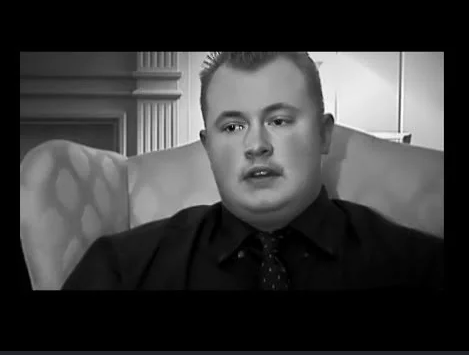
This is not a tale of lights in the sky. It is a chronicle of nonhuman technology, clandestine interception operations, and the human cost of breaking the most jealously guarded state secret on the planet.
1. Historical and Military Context: Operation Laser Strike
To grasp the veracity of the account’s backdrop, we must turn to the verifiable military record. In March 1997, the United States government, through U.S. Southern Command (USSOUTHCOM), was conducting Operation Laser Strike on South American soil.
This was a real, joint, highly classified counternarcotics mission. Its primary objective was the deployment of ground radars, reconnaissance aircraft, and military patrols to detect, intercept, and shoot down clandestine flights carrying drugs from the Andean and Amazonian regions to North America.
Jonathan Weygandt was deployed to the Peruvian jungle as part of this contingent. Specifically, Weygandt belonged to Battery B of Marine Air Control Group 28 (MACG-28). His technical training, completed at Fort Bliss, qualified him to operate the AN/TWQ-1 Avenger system. The Avenger is a highly automated, gyro-stabilized, short-range air defense system mounted on a Humvee (HMMWV) chassis. It features a turret that rotates 360 degrees and carries two pods holding a total of eight supersonic, infrared-guided FIM-92 Stinger missiles, supplemented by an FN M3P .50-caliber machine gun for close defense. His unit was sent to Pucallpa Air Base in Peru to provide perimeter security for the radar tracking stations and to gradually replace the aging Hawk missile platforms.
2. The Incident in the Gorge: The Shootdown and the Craft’s Characteristics
The routine of Operation Laser Strike was abruptly shattered when the Marine patrol to which Weygandt belonged received a radar alert. Central command reported the downing of a supposedly “allied or friendly aircraft” deep in the Peruvian Amazon. The patrol’s mission was to advance immediately on foot through the dense vegetation, secure the perimeter, and search for survivors.
Upon reaching a rocky gorge, what they found defied all military logic:
- Morphology of the object: There was no shattered fuselage, no broken wings, no burned-out jet engines. Embedded directly in the face of the stone cliff was a gigantic structure with a perfectly aerodynamic egg or teardrop shape.
- Anatomy of the hull: Weygandt described the craft as roughly 10 to 15 meters (about 33 to 50 feet) long. It had no windows, rivets, weld seams, or conventional control surfaces such as ailerons or rudders. Its outer texture resembled the shell of an insect or a form of integrated biological armor.
- Organic nature: Weygandt described the object’s outer material as not resembling cold, industrially riveted metal. It had a texture he called organic, almost as if it were composed of biological tissue or an unknown synthetic compound of a living nature.
- Damage and fluids: The violent impact against the rock had left the structure with large cracks or fissures. A viscous, thick, luminescent liquid seeped from these openings, shifting in color between greens and purples. Through one of the large cracks caused by the impact, Weygandt saw that the interior contained no electrical wiring, piping, or visible combustion engines. Instead, the viscous green-purple fluid seemed to circulate throughout the entire internal structure like a circulatory or lymphatic system. In his second interview, he also stated that he briefly saw what appeared to be a limb or hand with only four digits (fingers) hanging motionless from one of the damaged openings in the craft.
- Sound frequency: The entire impact zone was enveloped in a distinctive acoustic phenomenon: the craft emitted a constant, low, characteristic humming, a vibration that could not only be heard but was physically felt in the soldiers’ chests.
- Cause of the crash: From the trajectory and the type of damage, Weygandt deduced that the object had not gone down because of a mechanical failure but had first been intercepted and shot down by a surface-to-air H.A.W.K. missile operated by the Peruvian Armed Forces, whose radars maintained constant scans of the air border during the counternarcotics operation.
3. The Sensations: The Telepathic Communication Experience
The most complex and profound aspect of Weygandt’s testimony concerns what he experienced neurologically and sensorially as he approached the gorge. He maintains that the craft, or whatever was operating inside it, possessed a consciousness interface capable of interacting with the human mind.
As he neared the organic structure, his brain was flooded by a direct telepathic transmission. Weygandt was careful to clarify that this did not occur as spoken words in English, but through the massive, instantaneous implantation of abstract concepts, images, and, above all, raw emotions.
The predominant sensation was an unbearable wave of physical pain, terror, agony, and absolute despair. He perceived with complete clarity that the occupants of the object were trapped, gravely injured, or dying inside as a result of the impact. The experience was so overwhelming that Weygandt himself, overcome with empathy for the suffering he was picking up in his own mind, tried to project a thought back toward the craft, obsessively repeating to himself: “Easy, we’re not going to hurt you, everything’s going to be okay,” in an attempt to calm the anguish bombarding him.
4. The Intervention and the Arrest: The American Operators in the Shadows
While the patrol was still absorbing the visual and mental impact of the discovery, the U.S. government’s containment and reverse-engineering protocol was activated at high speed. The site was seized by a clandestine military force that neutralized the American Marines themselves.
- The captors (paramilitary “Men in Black”): The gorge was surrounded by heavily armed operators wearing tactical fatigues and completely black camouflage. Weygandt emphasized one key detail: these men wore no flags, unit insignia, rank, or name tapes. Their formal identity had been erased.
- Unmistakable nationality: Despite the lack of insignia, Weygandt determined at once that they were U.S. citizens. He knew this from hearing them talk among themselves and from receiving their direct orders: they spoke flawless native English, with strong regional accents characteristic of the East Coast and the American South. They acted with an authority higher than that of any standard military command.
- The recovery team: A few minutes later, the area filled with personnel from the U.S. Department of Energy (DOE). These operatives wore top-level NBC protective suits (MOPP gear) to guard against radiation or biological contaminants. Almost simultaneously, two CH-47 Chinook heavy-lift helicopters arrived to begin dismantling and extracting the structure.
- Arrest and confinement: Weygandt and every member of his Marine patrol were roughly shackled at the hands and feet. They were hooded or blindfolded and immediately separated. They were taken into strict custody at temporary facilities and isolated in individual rooms to prevent any communication or comparing of stories among them.
5. The Obsessive, Off-the-Books Interrogation
During the period of clandestine detention, Weygandt was subjected to high-pressure psychological interrogations by the agents in black. What struck the Marine most was the focus of the questions:
- The focus on the mind: The agents did not limit themselves to asking what he had seen or heard. The interrogators’ principal and most aggressive line of questioning centered on learning exactly what he had felt, mentally and psychologically, as he approached the UFO.
- Fear of the message: The clandestine agencies plainly feared that the craft or its occupants had implanted classified information, coordinates, codes, or some kind of ideological message in the soldier’s brain through the telepathic link.
- The forced pact of silence: After hours of pressure, he was made to sign nondisclosure agreements of the highest classification, under the direct threat that if he revealed what had happened to the press, to his family, or to other service members, he would “disappear” from the system or face fatal repercussions.
The interrogation also took an aggressive turn regarding his military training. As a qualified Stinger missile gunner, he was pressed hard so that the agents could make sure Weygandt could not carry out a technical ballistic analysis on his own. They grilled him about the Pucallpa base radar and about the trajectory records that his own Avenger’s automated systems might have captured before Air Force officers irregularly confiscated the flight logbooks from the command room.
6. The Post-Mission: Return to the U.S. and the Erasure of Records
Once the recovery team had secured the material in the jungle, the process of neutralizing the witnesses’ paper trail began.
Weygandt was extracted from Peru under strict security measures and returned to U.S. soil, completely isolated from his original unit. The Pentagon then expedited his separation from the military through an honorable but forced discharge.
This decision reflects a standard intelligence strategy: granting an honorable discharge avoids audits, courts-martial, or legal investigations that would necessarily leave public records and set off alarms in the press. Weygandt’s official service record states that he served with honor and was deployed to Peru under Operation Laser Strike, but any mention of the shootdown, the unofficial detentions, or the Department of Energy operation was scrubbed. Officially, as far as the military’s administrative books are concerned, those events never happened.
7. The Human Cost: Trauma, Paranoia, and Family Silence
Jonathan Weygandt’s civilian life after his return in 1997 became a profoundly destructive psychological ordeal:
- Chronic post-traumatic stress disorder (PTSD): Although the authorities never formally labeled him “crazy,” which would have generated a medical history traceable under the Freedom of Information Act (FOIA), Weygandt developed severe symptoms of trauma. For decades he lived with constant nightmares about the suffering of the beings in the craft and about being shackled in the jungle.
- Total family isolation: His family and close friends noticed right away that the outgoing young Marine who had left for Peru had come back a completely different man: sunk in a hermetic silence, surly, and in a constant state of alert. Weygandt could not confess the reason for his anxiety to his parents or loved ones, out of a genuine fear of endangering his own family’s safety in the face of the clandestine operators’ threats.
- Surveillance and intimidation: For years, the former Marine reported symptoms of indirect harassment, such as strange noises and interference on his landlines and the sporadic presence of unusual vehicles near his residences, mechanisms used to remind him that he was still under observation.
8. Epistemological Closing: The Value of a Witness with No Incentives
In evaluating the credibility of testimony within the UFO phenomenon, sound methodology requires examining the witness’s incentives. This is where the Weygandt Case acquires unusual solidity compared with internet hoaxes:
Jonathan Weygandt gained absolutely nothing by telling this story; on the contrary, he risked everything. He wrote no commercial books, charged no fees for mass speaking engagements, and never sought to build a fan club on digital platforms. After first breaking his silence in 2000, during the filming of the Disclosure Project organized by researcher Steven Greer, Weygandt slipped back out of public life for more than 20 years, living modestly and as a private citizen, carrying the aftereffects of the trauma in complete discretion.
If he has decided to resurface, very selectively, in independent interviews and documentary investigations beginning in 2023, it is strictly because of the current geopolitical shift. Watching the U.S. Congress begin to hold official hearings in which former intelligence officers (such as David Grusch) and combat pilots testify under oath about the existence of hidden crash retrieval programs and the possession of technologies of nonhuman origin, Weygandt came to understand that the legal and social context was finally validating the nightmare he lived in the Peruvian jungle in 1997. His account is no longer isolated; it now forms part of a historical puzzle that the world is only beginning to piece together.
References
1. Research Books (Ufology and Testimony)
Weygandt’s testimony was collected and formally analyzed by reputable researchers of the phenomenon before it went viral on social media.
- Greer, S. M. (2001). Disclosure: Military and government witnesses reveal the greatest secrets in modern history. Crossing Point, Inc.
(Note: This book contains the exact transcript of the first sworn, filmed statement Weygandt gave in 2000.) - Kean, L. (2010). UFOs: Generals, pilots, and government officials go on the record. Crown Publishing Group. (Note: A highly analytical review of radar behavior and military interceptions in the region.)
2. Audiovisual Media Interviews and Podcasts (Primary Sources)
Because Weygandt broke his silence in video and audio formats, these platforms serve as the direct historical record of his technical statements.
- Killeen, D. (Producer), & Willis, M. (Host). (2023, September 6). Jonathan Weygandt exclusive Peru encounter (Episode 512) [Audio podcast episode]. In Podcast UFO. Storytel. https://open.spotify.com/episode/5J72e2EQl1lB5FLF6h5WkO
- UAP Gerb. (2025, August 20). 1997 Peru UFO crash retrieval: The story of Jonathan Weygandt (featuring brand new in-person footage) [Video]. YouTube. https://www.youtube.com/watch?v=7Jc2G5aEH0A
- Willis, M. (Host). (2024, May 7). Jonathan Weygandt & Mike Herrera: Marine encounters (Episode 608) [Audio podcast episode]. In Podcast UFO. Spotify. https://open.spotify.com/episode/4Q6weQ29CjjsbudrixQk6m
3. Contextual and Historical Documents (The Real Military Framework)
- United Press International. (1996, June 27). US, Peru take to water in war on drugs [Press archive]. UPI Archives. https://www.upi.com/Archives/1996/06/27/US-Peru-take-to-water-in-war-on-drugs/8816835848000/
- United States Southern Command (USSOUTHCOM). (1998). Operation Laser Strike: End of mission report and regional radar tracking assessment for 1997 [Classified/partially declassified government report]. U.S. Department of Defense.


Leave a comment