UAPs and Close Encounters of the Fourth Kind: Evidence of Solid Light and Anomalous Optics Against Neuropsychological Dogma
Orthodox psychology and neurobiology have a stock answer for anyone who reports a close encounter inside their own bedroom: “It’s just sleep paralysis.” To avoid unsettling current scientific paradigms and to satisfy Karl Popper’s criteria, academia prefers to stretch the definition of “hypnagogic hallucination” to the breaking point. But what happens if we set the dogma aside and put these accounts to the test of mathematics?
When we run the raw data from global ufology databases through Bayesian analysis, the sleep-paralysis hypothesis falls apart. The math tells us we’re looking at a real, objective, external physical pattern.
The San Juan de Lurigancho Case (Year 2000)
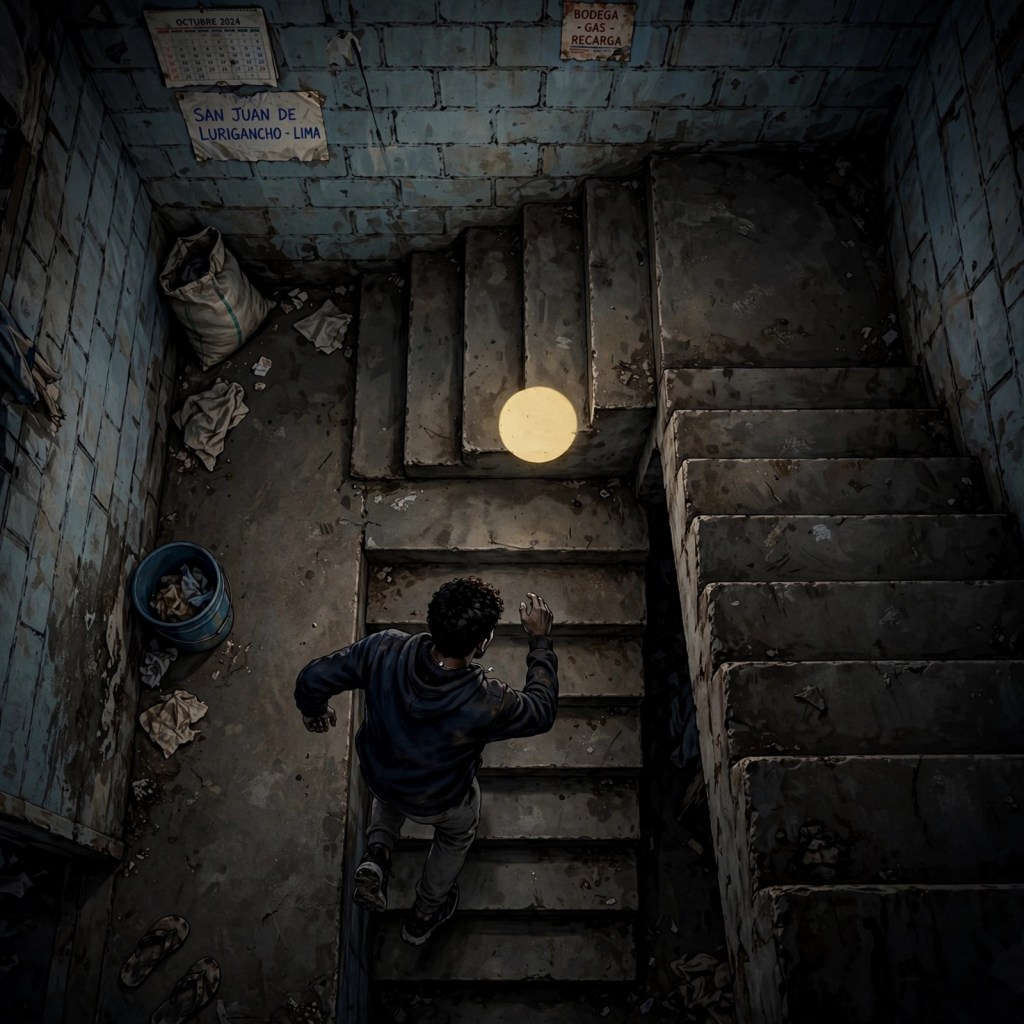
To understand the physics of the phenomenon, there’s no better example than what happened in the year 2000 in San Juan de Lurigancho, Lima, Peru — a well-known sighting hotspot. There, witness Reynaldo Molleda experienced an extraordinary event that defies conventional optics, producing two distinct types of anomalous light in his own home:
• The Solid Light (Geometric): Reynaldo watched a small luminous circle climb the staircase. What was remarkable is that, as it moved up the steps, the circle never deformed. It didn’t break at the edges, and it didn’t stretch across the concave or convex angles of the structure — it stayed perfectly round the entire time.
• The Isotropic Light (Shadowless): A glow that flooded the entire room. His brother, who was in the same house at the time, witnessed only this phase of the phenomenon.
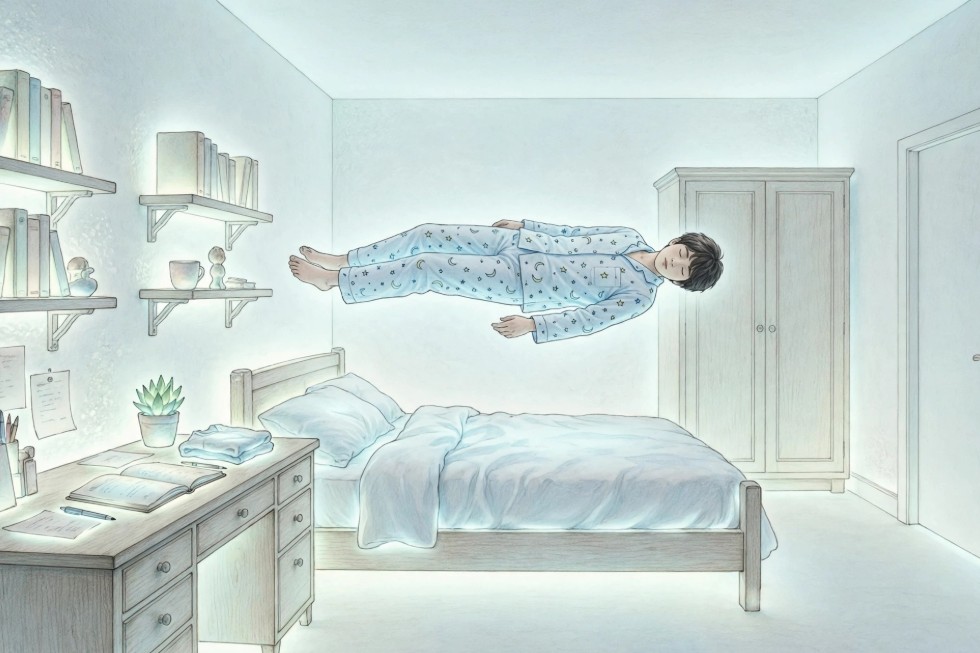
Any ordinary flashlight or laser projects itself according to the geometry of the surface it hits, forming distorted ellipses. What Reynaldo witnessed was not a distant reflection — it was a self-contained body of light.
Translating the Data: What Are These Lights, According to Researchers?
For the investigators and scientists who have led data collection efforts for decades — astronomer J. Allen Hynek, astrophysicist Jacques Vallée, and the team at astronaut Edgar Mitchell’s FREE Foundation, among others — these reports are not chaotic hallucinations. They are recurring physical constants that can be defined quite simply:
• Isotropic / Shadowless Light (Modern Data): The FREE Foundation found that 71% of witnesses report light with no visible focal source, and 62% specifically note that it casts no shadows. In physics, “isotropic” means the light shines with equal intensity in every direction. When light emanates volumetrically from the air itself, or from the molecular structure of the surrounding environment, projection vectors cancel out — making it physically impossible for objects to cast shadows.
• Solid / Truncated Light (Historical and Modern Data): Historical catalogs such as UFOCAT (1970s) coded this behavior in 28% of their physical cases, while FREE recorded it in 38%. Researchers describe it, in plain terms, as “an ultra-high-density collimated beam with sharply defined edges.” That means the photons — the particles of light — are not scattering freely; they behave as if confined inside an invisible “force bubble.” The light acts like a fluid held inside a geometric mold (a perfect cylinder or sphere) that stops abruptly in midair and behaves like a solid object, ignoring the corners of its surroundings.
Summary of Optical Variables Across Global Databases
| Catalog / Study | Optical Variable Analyzed | Frequency in Critical Cases | Researchers’ Interpretation |
| FREE Foundation (2018) | Ambient light with no focal source | 71% | Volumetric structural illumination. |
| FREE Foundation (2018) | Isotropic light, no shadows | 62% | Absence of physical projection vectors. |
| FREE Foundation / UFOCAT | Solid or truncated beam of light | 38% / 28% | Photon confinement (dense collimated light). |
| Clinical Sleep Studies | Flashes, spots, or phosphenes | < 2% / 0.5% | Endogenous visual hallucination (neural noise). |
The Mathematical Filter: Bayesian Analysis, Step by Step
If we apply Bayes’ Theorem to calculate the posterior probability that a witness is describing a Genuine Abduction Event (A) — an exogenous physical phenomenon — against the sleep-paralysis argument, the numbers speak for themselves.
Step 1: The Ultra-Skeptical Stance (The Prior)
We start from a hyper-conservative position. Across the general population, the baseline mathematical probability that a bedroom report reflects a real physical event, rather than a mix-up, is barely 1% (P(A) = 0.01). The remaining 99% is attributed to noise or psychological causes.
Step 2: Introducing the Isotropic Light (Modern Data)
We filter in the first data point from the San Juan de Lurigancho case: shadowless ambient light. The probability that a real event includes this kind of light is 62% (P(L|A) = 0.62). The probability that ordinary sleep paralysis would spontaneously invent such a specific shadowless geometry is only 2% (P(L|Aᶜ) = 0.02).
Result 1: Running the Bayesian formula, the probability that the report is real jumps sharply from 1% to 23.84%. The optical filter is already starting to clear out the noise.
Step 3: Introducing the Solid Light (Historical and Combined Data)
Now we add Reynaldo Molleda’s second observation: the small circle climbing the stairs without deforming. Cross-referencing the consistency between UFOCAT’s older data and FREE’s more recent data, we know a real event produces this truncated beam in 38% of cases (P(H|A) = 0.38). By contrast, the probability that a human brain under sleep paralysis would spontaneously combine shadowless light with a non-deformable solid beam is nearly zero — just 0.5% (P(H|Ac) = 0.005).
Calculating the joint likelihood of both variables, the final equation reads as follows:
P(A | L, H) = (0.62 × 0.38 × 0.01) / [(0.62 × 0.38 × 0.01) + (0.02 × 0.005 × 0.99)]
P(A | L, H) = 0.002356 / (0.002356 + 0.000099) = 0.9596
Final Probability: 95.97%
Conclusion: What’s Reasonable vs. What’s Dogmatic
Starting from a radical 1% skepticism, the presence of these two optical signatures in a witness account raises the probability of a genuine event to 95.97%.
A human brain under stress, or during standard nighttime hallucinations, can certainly invent diffuse lights or chaotic flashes — but it does not consistently engineer anomalies of geometric optics. The remarkably low mathematical variance (0.0005) between catalogs compiled fifty years ago and those compiled today shows that independent witnesses are recording the exact same external physical stimulus.
Claiming that cases like Reynaldo Molleda’s in the year 2000 amount to “sleep paralysis” that just happens to be statistically coordinated worldwide stops being science. What’s truly reasonable — backed by hard data and mathematics — is to accept that we are dealing with a technology capable of shaping the geometry of energy in free space.
Your Turn: Have You Witnessed This Phenomenon?
Mainstream science prefers to ignore the mathematical consistency of the data rather than rewrite the physics textbooks. But testimonies keep piling up with pinpoint precision all over the world.
We’d love to hear about your experience! Have you ever witnessed a room light up completely without casting a single shadow, or a dense beam of light with perfectly geometric edges? If you’ve had a similar experience, or have questions about this mathematical analysis, leave a comment below and share this article with anyone looking for answers beyond dogma.


Leave a Reply